
Charter Yacht.com Guides · Destination · August 2026
Where the mountains fall into the sea
Thousand metre walls, water deep enough to idle beside a waterfall, and a coast that rewards patience. The fjords, done properly.
By the Charter Yacht.com team
The Norwegian coastline runs to roughly one hundred thousand kilometres once you trace every fjord and island, and almost none of it was arranged for people in a hurry. That suits a superyacht. The water is deep enough for a 70 metre hull to idle a yacht length from a waterfall, the villages are small enough that your arrival counts as news, and the distance between one astonishment and the next is measured in minutes rather than days.
What an expedition here actually involves
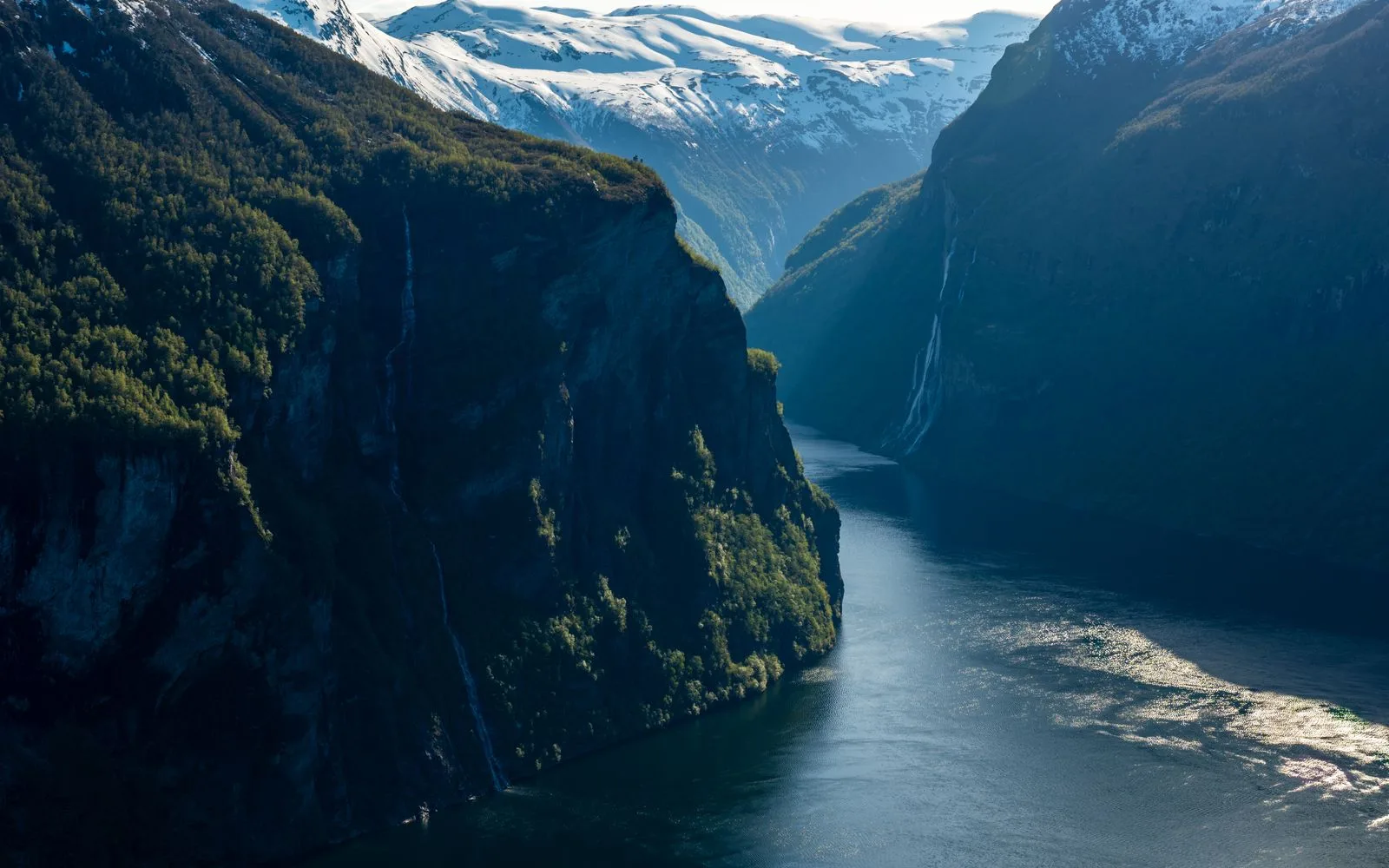
The fjords are sheltered, glacially carved and free of sea ice in summer, so you do not need an ice class hull to cruise them, though several of the expedition yachts that summer here carry one for the run north to Svalbard. The technical signature of Norway is depth. Geirangerfjord bottoms out around 260 metres and Sognefjord beyond 1,300, so anchoring becomes a craft rather than a formality. Crews run stern lines ashore or hold position quietly while you eat breakfast beneath a cliff. Tenders do the finest work here. The smallest stave churches, the eagle gorges and the fishing hamlets with room for six yachts all sit in water too tight for the mothership, and a fast tender with a local skipper aboard is worth more than anything in the toy garage.
The waters that matter
Geirangerfjord and Naeroyfjord share a UNESCO World Heritage listing and earn it in different registers. Geiranger is theatre, the Seven Sisters waterfall unravelling down its northern wall, while Naeroyfjord narrows to about 250 metres across, tight enough that daylight rations itself. Lysefjord runs beneath Preikestolen, the pulpit of rock 604 metres above your sun deck, and Hardangerfjord softens everything with orchards climbing from the tideline. Then the coast turns Arctic. Lofoten is a wall of granite rising straight from the Norwegian Sea, with anchorages off Reine and Henningsvaer that look staged. Trollfjord's entrance is barely 100 metres wide, a gap the coastal steamers famously nose into and pivot out of. Your captain can take you in at midnight, in full sun, and stay.
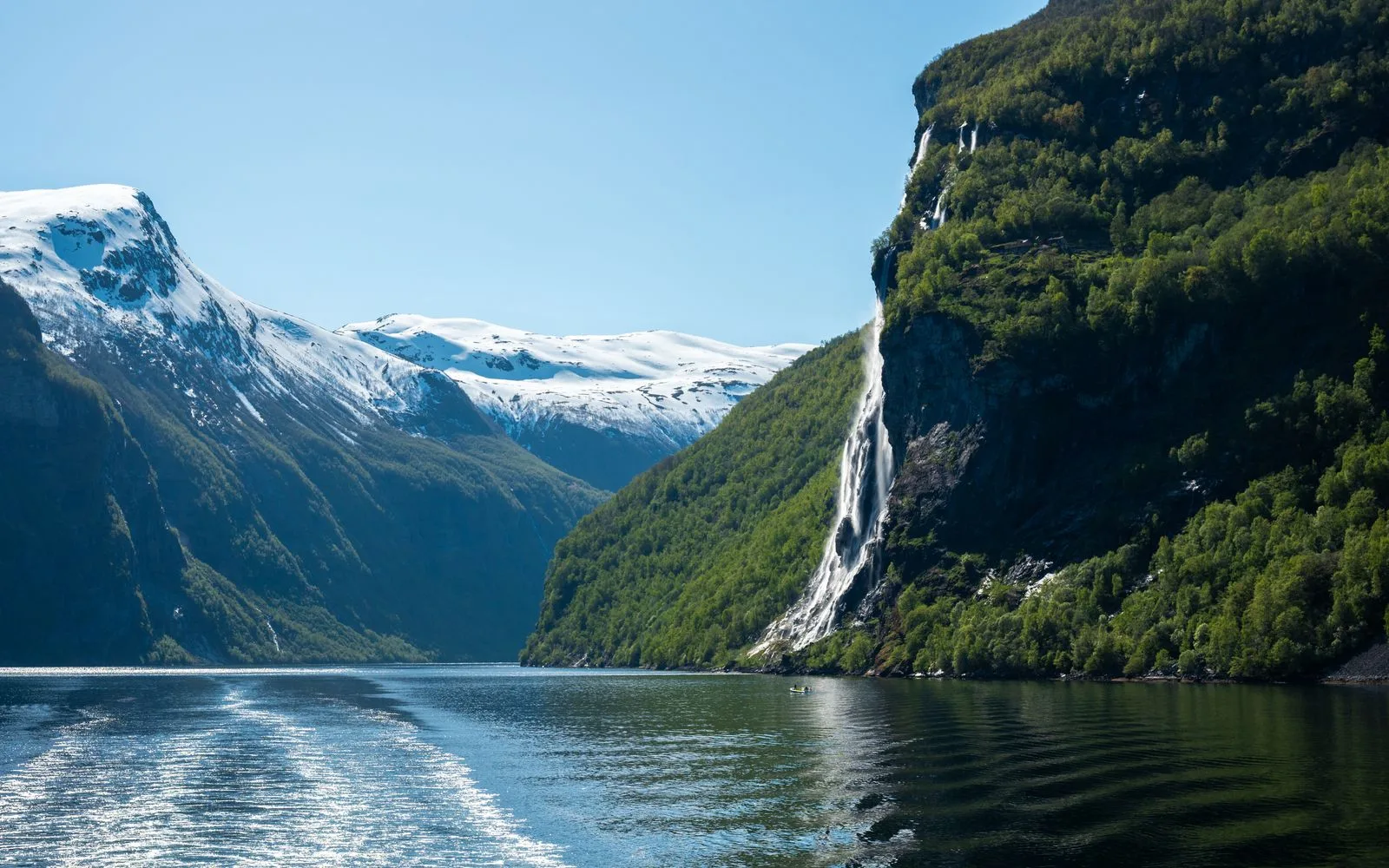
Sognefjord is deeper than the North Sea. You anchor with stern lines ashore, or you do not anchor at all.
A working coast, and its table
This has never been a resort coastline. Svolvaer still lands cod and hangs it on wooden racks to dry as it has for a thousand years, Alesund rebuilt itself in art nouveau after the fire of 1904, and the Bryggen wharf in Bergen has been trading fish for seven centuries. Provisioning follows the same honesty. King crab comes down from the far north, langoustine and halibut from the fjord mouths, strawberries and cherries from Hardanger, sweeter for the long light, and brunost, the caramel brown cheese Norwegians defend with a perfectly straight face. A chef who shops the fish co-ops here needs very little else.
When to come
The season proper runs May to September. May and June bring the waterfalls at full charge on snowmelt, and north of the Arctic Circle the midnight sun holds from late May to mid July, which does strange and wonderful things to a dinner that starts at ten. July and August are the warmest months and the closest the coast comes to busy, a relative term across one hundred thousand kilometres. September turns the birch forests gold and brings the first aurora of the season. Then there is the winter case, for the committed. Between November and January, herring shoals draw orcas and humpback whales into the fjords around Tromso and Skjervoy, and a well run expedition yacht with a heated deck turns that into the most extraordinary fortnight the north offers. Talk to us about chartering in Norway, and we will match the yacht to the season rather than the other way around.
Take this water
Tell the broker where and when, and we will shortlist the yachts that fit.
Ready when you are