
Charter Yacht.com Guides · Destination · August 2026
A thousand islands, one sea
Croatia strings more than a thousand islands along the Adriatic. A superyacht turns Hvar, Vis, the Kornati and Mljet into one unhurried itinerary.
By the Charter Yacht.com team
Croatia's coast counts 1,244 islands, islets and reefs, and fewer than fifty of them are inhabited. The arithmetic favours the yacht. From the motorway the coast reads as a wall of grey mountain, but from the water it is an archipelago running almost unbroken from Istria to Dubrovnik, with an anchorage every few miles and a walled stone town every few more.
Sheltered water, short hops
The islands lie parallel to the mainland, so there is nearly always a lee, and passages between overnight stops rarely run more than a couple of hours. The summer pattern is kind, a still morning, the maestral filling in from the northwest after lunch, calm again by dinner. Split and Dubrovnik bookend the cruising grounds with international airports and proper quays, so one-way itineraries work beautifully. It is the easiest serious cruising ground in the Mediterranean to do well, which makes it a fine first charter and a better fifth one, something worth raising when you plan a charter.
The islands that matter
The Kornati are 89 islands of bare, folded limestone, a national park with almost no permanent inhabitants, moonscape above the waterline and thick with life below it. Telascica, next door on Dugi Otok, pairs sheer sea cliffs with a salt lake warm enough to float in all afternoon. Vis, furthest out in the Dalmatian chain, was a closed military zone until 1989 and kept its two stone towns unspoiled as a result; its satellite Bisevo hides the Blue Cave, and the cove at Stiniva opens through a gap in the cliffs barely wider than a tender. Off Hvar, the Pakleni islands scatter pine and lavender across a mile of channels, with long lunches at Palmizana. Mljet, near Dubrovnik, is a national park where a twelfth-century monastery sits on an islet in a saltwater lake, an island on an island. The car-free Elaphiti islands, Lopud and Sipan, finish the run south.
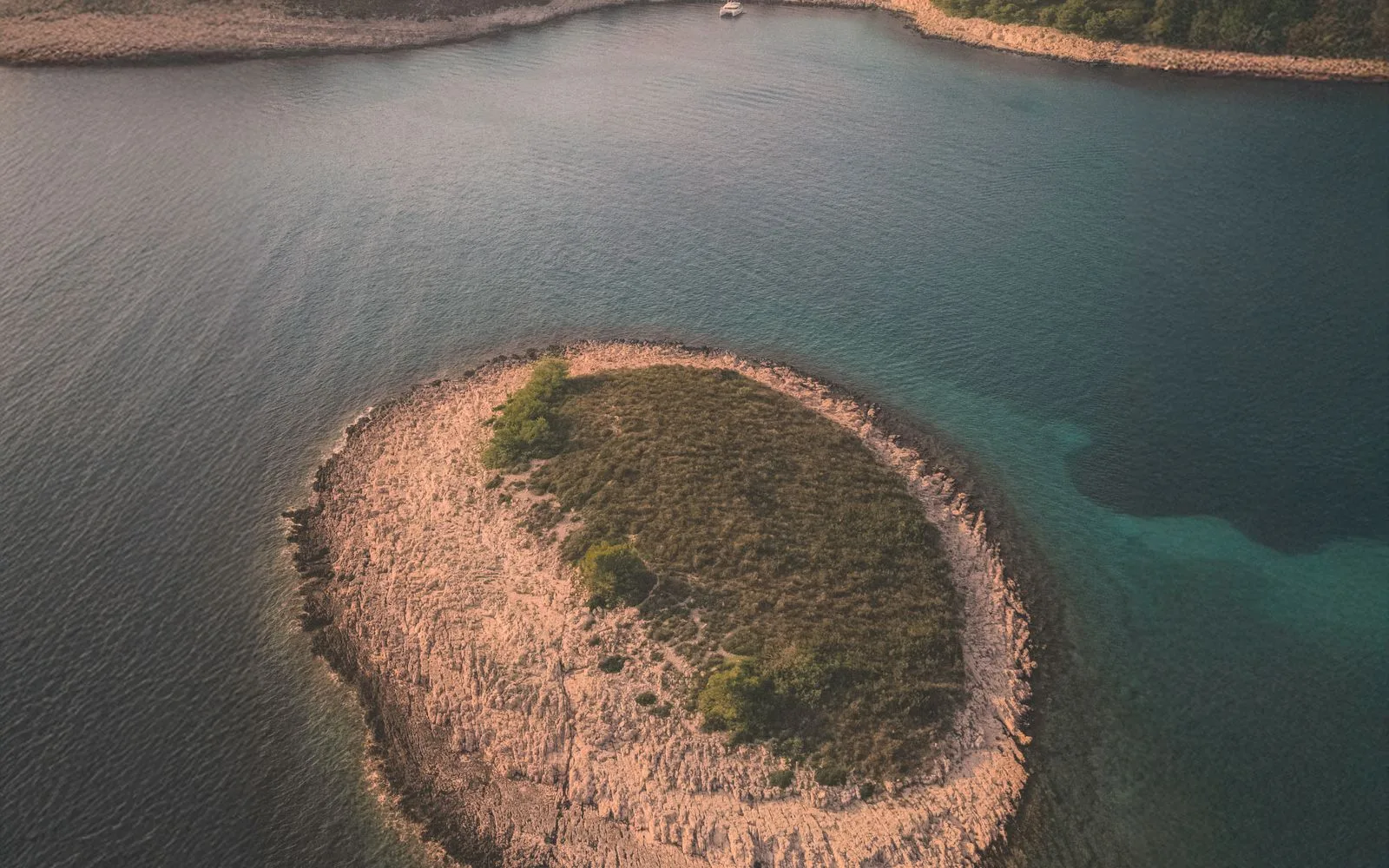
Vis was closed to outsiders until 1989. It missed forty years of mass tourism, which is precisely why you go.
Stone towns and their tables
The emperor Diocletian retired to his palace at Split in 305 AD and the town simply moved in after him, so you drink your morning coffee inside a Roman peristyle. Hvar town keeps its Venetian loggia and a communal theatre from 1612, among the oldest in Europe. Korcula's herringbone streets claim Marco Polo as a son, and Dubrovnik's walls are best walked at eight in the morning, before the cruise ships exhale. Eat peka, octopus or lamb slow-cooked under an iron bell and ordered hours ahead, as it must be. Try gregada, the fishermen's stew of Hvar, and the oysters of Mali Ston bay, farmed there since antiquity. Drink Posip from Korcula with the fish and Plavac Mali from the steep Peljesac vineyards with the lamb, and finish with a rakija you did not order.
When to come
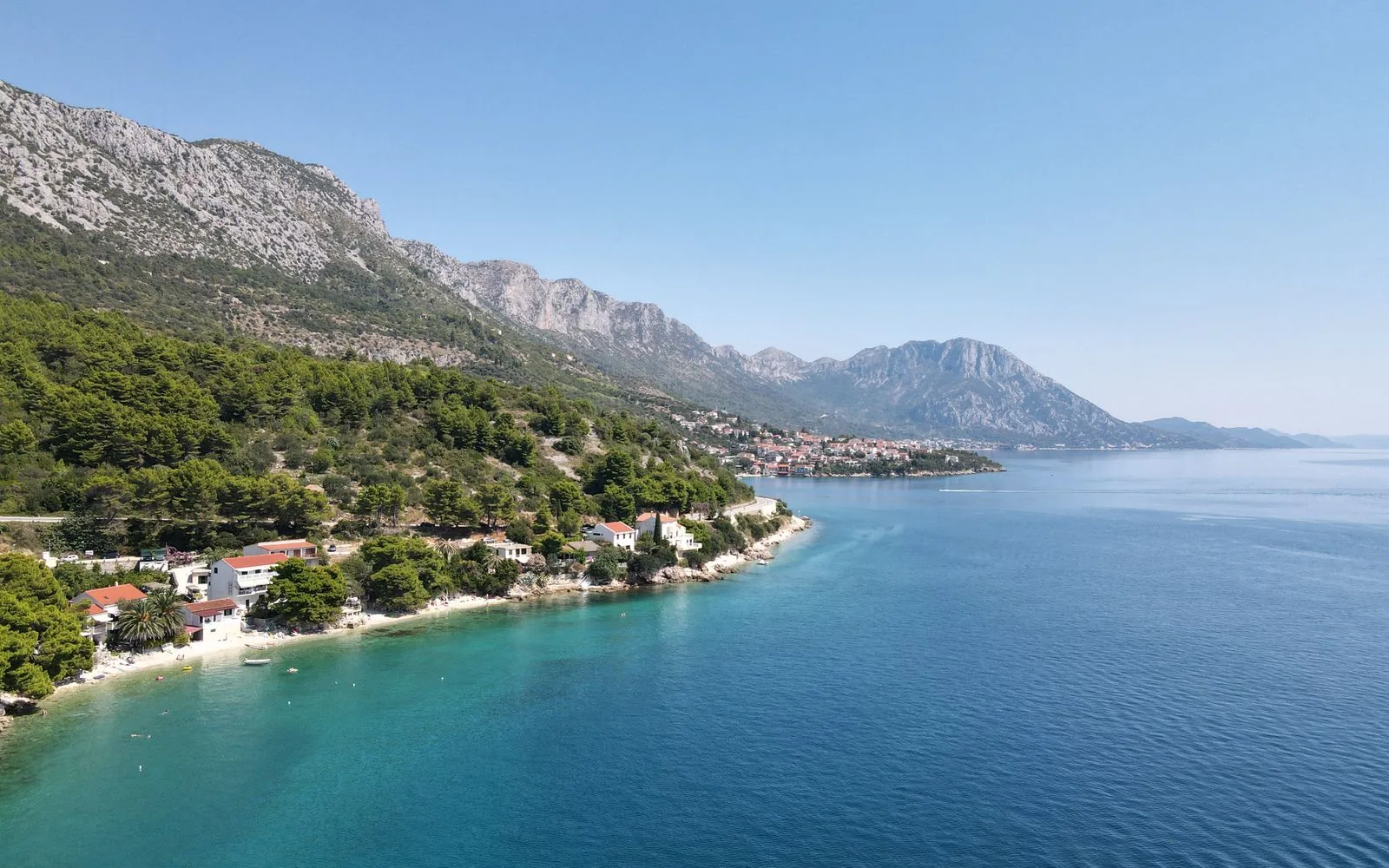
The season runs from mid May to early October. July and August are the social months, when Hvar's quay becomes a catwalk and the Pakleni anchorages fill by noon, though with more than a thousand islands the sea itself never feels crowded. June and September are the sweet spots, warm water, open restaurants, empty coves. Early October still swims in the south. Whatever the month, the rule of the Adriatic holds, if an anchorage disappoints, a better one is forty minutes away.
Take this water
Tell the broker where and when, and we will shortlist the yachts that fit.
Ready when you are